
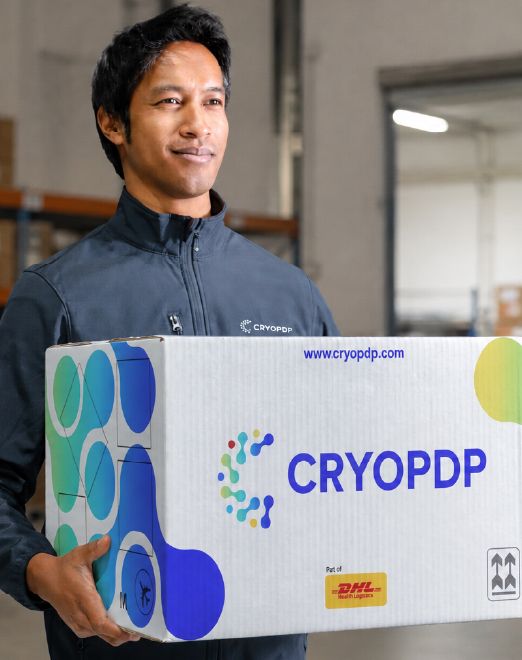
Global Logistics, Local Challenges

Global standards create a common baseline for life sciences logistics, but local conditions still shape shipment decisions. In the UK, customs procedures, airport capacity, demanding delivery expectations and changes in healthcare delivery can all alter the plan before collection begins.
In this interview, David Whitaker shares the reality of operating in this market, including how teams manage customs, cold chain control and disruption, and how the NHS shift towards care in the community is changing the role of direct-to-patient logistics, showing why local experience still matters within a global network.
Q: What makes your region uniquely challenging for cold chain logistics?
A: The UK presents a highly complex operating environment due to particularly strict healthcare regulations, varying infrastructure capabilities, customs requirements, and the critical time sensitivity of life sciences shipments. The expectation for end-to-end visibility and uninterrupted temperature control means every movement must be proactively monitored and carefully coordinated. We mitigate these challenges through specialised operational oversight, strong local partnerships, a fully owned, multi-depot, driver-consolidated fleet operation, and a highly proactive customer service approach.
The UK market has very high service expectations, and innovative logistics concepts often launch here because of relatively manageable distances, high customer spend, and unusually high patient density compared to other countries. We have seen leading-edge developments in general logistics such as 15 min delivery window dark warehouse-to-door services, 2 hour window pharmacy-to-home delivery services (with photo ID), parenteral medicine over-the-threshold home delivery with remote cold chain stock management in the home and, more generally, a much higher level of customer expectation than elsewhere in the World, which has impacted the healthcare sector through awareness of these capabilities more generally = very demanding customers indeed!
Q: What trends are shaping logistics in your region?
A:The industry is seeing significant growth in personalised medicine, cell and gene therapy logistics, direct-to-patient services, sustainability initiatives, and digital shipment visibility. In the UK, the government-run National Health Service (NHS) is pushing heavily for “Care in the Community”, effectively pushing people out of expensive hospitals and into their own homes, where they receive care from mobile nursing teams, with extra requirements in terms of support and medical or equipment supplies through specialist healthcare logistics providers.
Demand is also rising for faster response times, stronger compliance, and real-time tracking solutions. Clients want logistics providers that combine global reach with specialist healthcare expertise and local operational knowledge.
Q: How do you ensure consistency with global standards?
A:We achieve consistency through standardised global processes, GDP-compliant operations, continuous training, quality management systems, and strong collaboration between regional and global teams. At CRYOPDP, we combine global standards with local operational expertise to ensure shipments are handled consistently, compliantly, and with the highest level of care, regardless of origin or destination.
Q: What are the biggest customs or clearance challenges?
A:Customs delays are one of the biggest risks to time- and temperature-sensitive healthcare shipments. Challenges often include inconsistent documentation requirements, changing regulations, inspections, and varying interpretations by local authorities. Our teams work closely with brokers, local offices, and authorities to ensure accurate documentation and pre-alerts are completed in advance, significantly reducing the risk of clearance delays. The green light process of gaining import clearance in principle in advance of shipping is a standout feature which significantly improves reliability and ultimately customer confidence.
Q: How do cultural or operational differences impact execution?
A:Successful global logistics requires more than operational capability — it requires cultural understanding and local expertise. Communication styles, working practices, escalation processes, and response expectations can differ significantly between regions. CRYOPDP’s global network and local operational teams allow us to bridge these differences effectively while maintaining a consistent customer experience and service standard. The UK CRYOPDP operation has more than 20 years of experience, including operating and founding many other CRYOPDP offices in countries such as the US, India, and Korea, as well as extensive experience working with a multitude of LSPs worldwide.
Q: What regulatory hurdles are most impactful?
A: The most significant regulatory challenges typically involve import/export permits, GDP compliance, customs documentation, temperature-control validation, and country-specific healthcare regulations, including MHRA-regulated and especially unlicensed medications, which are subject to extra scrutiny and vigilance by authorities. Regulatory requirements can vary significantly between countries, particularly for clinical trials, cell and gene therapies, and biological materials. Our expertise lies in understanding these variations and ensuring shipments remain compliant whilst minimising delays and operational risk. The UK Exports team, in particular, has over 150 years of combined experience and deep knowledge of how to ship specific medications to difficult-to-access countries, e.g., LATAM.
Q: How do infrastructure limitations affect operations?
A: Infrastructure limitations can impact transit times, airline capacity, airport handling standards, road accessibility, and cold storage availability. In some regions, maintaining uninterrupted cold chain conditions requires enhanced contingency planning and additional operational controls. CRYOPDP addresses this through route risk assessments, qualified packaging solutions, validated carriers, and continuous shipment monitoring to maintain product integrity throughout the journey. The DHL acquisition of CRYOPDP increases capabilities, particularly in air and road linehaul, including weekend options, enabling new, improved levels of commerciality. Additionally, the UK has expanded its airport operations to LHR, MAN and EDI to provide a more comprehensive suite of options, but particularly to support our Northern and Scottish customer base.

Q: What surprises clients most when shipping to your region?
A: Clients are often surprised by the level of planning and operational oversight required for specialised healthcare shipments. Even relatively simple shipments can involve multiple stakeholders, regulatory approvals, and contingency planning. Another common surprise is how quickly local conditions—such as weather, customs processes, or airline disruptions—can affect timelines, which is why proactive monitoring is critical. Additionally, the UK operation can offer a wide range of options and contingencies, including routing, modal choice, and priority services such as temperature-controlled direct drive.
Q: How do you mitigate delays in unpredictable environments?
A: We focus heavily on proactive shipment management rather than reactive problem-solving. This includes pre-planning, risk assessments, milestone monitoring, contingency routing, validated packaging, escalation management, and close communication with all stakeholders throughout transit. Our control tower approach enables rapid intervention when disruptions occur, helping protect both timelines and product integrity.