
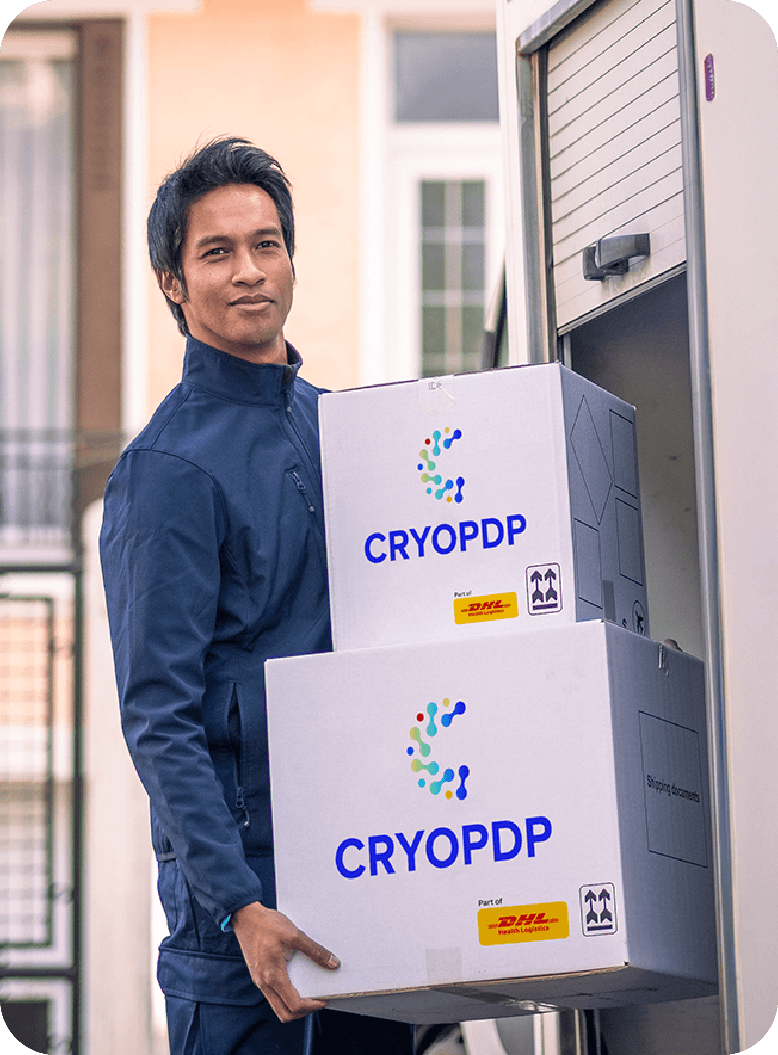
Before the next team can move forward

A conversation with Moe Mir, US Director of Operations at CRYOPDP, about cross-border handovers and what receiving teams need before they can move forward.
A clinical or pharmaceutical shipment is rarely just one delivery. For CROs, CDMOs, pharmaceutical and biotech teams, a sample, IMP, or material can sit between one completed step and the next, waiting to begin, whether that is a lab result, patient visit, production step, quality review, or release decision.
We spoke with Moe Mir, US Director of Operations at CRYOPDP, about what needs to stay clear when these shipments cross borders, from timing and temperature records to documentation, handovers, and the information receiving teams need before they can act.
Q: From an operations point of view, what should teams pay closer attention to when moving clinical and pharmaceutical materials?
Teams need to review what the shipment is connected to before it moves, because a single movement may be linked to a lab timeline, patient visit, production plan, or quality review.
When that is the case, the route is only one part of the work. The temperature range, packaging, documents, handover points, receiving site availability, and escalation contacts all need to be clear before collection, so the team waiting at the other end is not left trying to resolve missing details upon arrival.
Q: Why can delivery confirmation be too limited for these shipments?
Delivery confirmation indicates that the shipment reached the address, but it does not always indicate whether the material can be accepted, reviewed, tested, or used.
For the receiving team, the next step may still depend on the temperature record, the documents, the condition of the shipment and any update from transport. If those details are unclear, the shipment may be delivered, but the process surrounding it can still be on hold.

Q: What makes cross-border movements more demanding?
Cross-border movements usually involve more people, more documents and more handovers, which means there are more points where timing, communication and responsibility need to stay aligned.
A customs delay, missing document, late update, or temperature concern can quickly create pressure when the shipment is tied to a patient visit, lab result, production activity, or quality decision, because the impact extends beyond transport and reaches the team waiting to act.
Q: Why do handovers matter so much?
A handover is not only the moment when the shipment changes hands; it is also the moment when responsibility and information transfer to the next team.
The receiving side needs to know what was collected, how it was moved, whether the required conditions were maintained, and whether anything needs attention before the material can be accepted or used. When that information is missing or unclear, teams lose time asking questions that should already have been answered.

Q: What should useful visibility give teams during transport?
Useful visibility should give teams information they can act on while the shipment is still in transit, not just a final update after delivery.
That can include collection status, transit updates, delays, temperature concerns or any change that could affect the team waiting at the other end. For CROs and CDMOs, that information can matter to a lab, clinical site, production team, quality team or customer before the next step can continue.
Q: What should be clear before collection?
Before collection, teams should know what the shipment supports, whether it is connected to a patient visit, lab result, production step, testing process, quality review, or release decision.
They should also be aligned on the required temperature range, packaging, route, documents, handover points, receiving site availability, and escalation contacts, because those details are much harder to correct once the shipment is already in motion.
Q: What would you say to CROs and CDMOs planning shipments that involve several sites, partners or borders?
Plan the shipment with the receiving team in mind, because reaching the right address is only part of what needs to be done.
The people waiting for the material also need the right records, temperature information and context to move forward. When those details are clear before departure, teams are less exposed to avoidable questions, pressure upon arrival, and delays in the next clinical, production, or quality step.
What needs to be clear when the shipment arrives
By the time a shipment reaches the next site, the receiving team needs more than the material itself. They need the right records, clear temperature information and enough context to decide whether they can accept it and continue.
For CROs and CDMOs working across borders, good preparation can reduce open questions after delivery, ease pressure on the receiving team and help the next step move forward with more confidence.