
VETERINARY LOGISTICS:
What happens before an animal health shipment arrives
Veterinary logistics is easy to underestimate until a shipment is delayed, a sample cannot be processed, or a temperature-sensitive product arrives with questions about its condition.
In animal health, the shipment is often only one part of a larger decision. A veterinary clinic may be waiting for a product before treatment can proceed. A laboratory may need a diagnostic sample to begin testing. An animal health company may need a vaccine, medicine or biological material to arrive in the correct condition. A research team may depend on a shipment to keep a study on track.
That is why veterinary logistics needs more than just transport from one point to another; it requires planning for the product, the route, the receiving site, and the people who will use what arrives.
Veterinary shipments are not all the same
Animal health logistics can have a lot of types of sensitive shipments, including veterinary vaccines, diagnostic samples, biological materials, temperature-sensitive medicines, research products and study materials.
Each one has different requirements.
A diagnostic sample may require rapid processing and clear information so the laboratory can process it without delay. A vaccine may need to stay within a specific temperature range from collection to delivery. A research product may require traceability, careful handling and coordination among several teams.
Treating these shipments as standard deliveries creates risk because the real question is not only whether they arrive, but also if they arrive ready for use.
The receiving site can change the whole plan
One of the biggest challenges in veterinary logistics is that the destination is not always a controlled or predictable environment.
A large diagnostic laboratory may receive specialist shipments every day. A smaller veterinary clinic may have limited storage space, shorter opening hours, or fewer staff available to receive a delivery. A rural site may be harder to reach. A research partner may need very specific handover instructions.
These details matter before the shipment moves.
If a delivery arrives when no one is available to receive it, the product may be left waiting. If a clinic does not have the right storage available, a temperature-sensitive shipment may be exposed to unnecessary risk. If the laboratory does not receive the required documentation, testing can be delayed even when the sample has arrived.
The route matters, but the handover matters just as much.
Cold chain control in animal health logistics
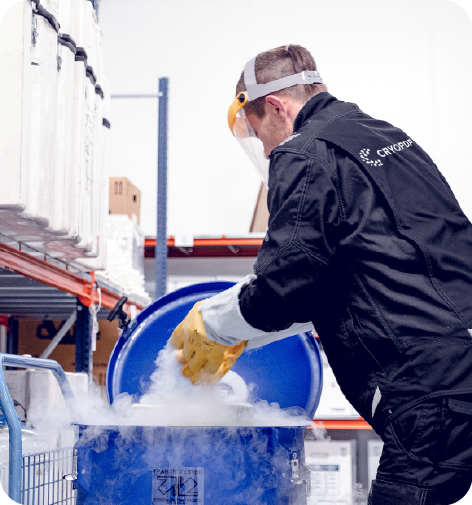
Many animal health products require controlled conditions. Some require chilled, frozen, or controlled-room-temperature transport. Others may be sensitive to time, handling, light exposure, or delays.
Veterinary cold chain logistics help protect these products throughout transportation. Including the right packaging, route planning, monitoring, handover instructions and communication with the receiving team.
Temperature control is not only about keeping a shipment cold. Being sure that the product remains in the specific state required for its designated application is the primary goal.
If these conditions are not met, the shipment will arrive, but the state won’t be as defined, and it will raise questions.
Was the product exposed to risk? Can it still be used? Is there enough information to support that decision?
A strong logistics process helps prevent those questions from becoming a problem.
Where veterinary logistics can go wrong
The risks in veterinary logistics are often practical. They are not always dramatic, but they can still affect the next step for the team receiving the shipment.
The most common risk points include:
- Temperature fluctuations during transport or handover
- Missing, incomplete or unclear documentation
- Deliveries arriving outside clinic or laboratory hours
- Limited storage conditions at the receiving site
- Delays affecting testing, treatment, research or product availability
For animal health companies, these issues can lead to product loss, additional checks, and uncertainty. Clinics and laboratories can slow down work that depends on shipments. For research teams, timelines are already difficult to manage.
Documentation and visibility are a non-negotiable
For sensitive veterinary shipments, documentation is an absolute must for the shipment’s value.
The teams need clear records to understand what was shipped, how it was handled, when it moved, and whether the required conditions were maintained. This matters for product quality, testing, research, and internal review. Visibility also reduces pressure and establishes trust. When teams know where a shipment is and whether anything has changed, they can plan the next step with greater confidence. Without that visibility, small delays can quickly escalate into larger questions.
The best process to follow is the one that leaves no room for doubt in veterinary logistics.
What animal health companies need from a logistics partner
Animal health companies need a logistics partner that understands more than the address on the label.
The partner needs to understand what is being transported, the required conditions, the urgency of the shipment, who will receive it, and what could affect the product before it is used. This is especially important when shipments move between suppliers, laboratories, clinics, research sites and animal health facilities. Several teams may be involved, but the shipment still requires a single, clear process from collection to delivery.
Good veterinary logistics brings those steps together. It helps protect the product, reduces avoidable delays and makes the handover easier for the team receiving it.
Veterinary logistics as part of specialist healthcare logistics
Veterinary logistics may be less visible than other areas of healthcare logistics, but it supports work that matters in animal health.
It can help a clinic treat, a laboratory test, a company protect product quality, or a research team continue its work. It also plays a role in prevention, diagnostics, disease monitoring, food systems and public health. At CRYOPDP, veterinary logistics is managed with the same focus as other sensitive healthcare shipments by protecting the product, maintaining a clear process, and ensuring teams receive what they need in the right condition.
In animal health, a shipment is not just something that arrives; it has a purpose and will enable the next decision.